Muscle Knots & Trigger Points | Deep Tissue Massage Bath

Muscle Knots & Trigger Points | Deep Tissue Massage Bath

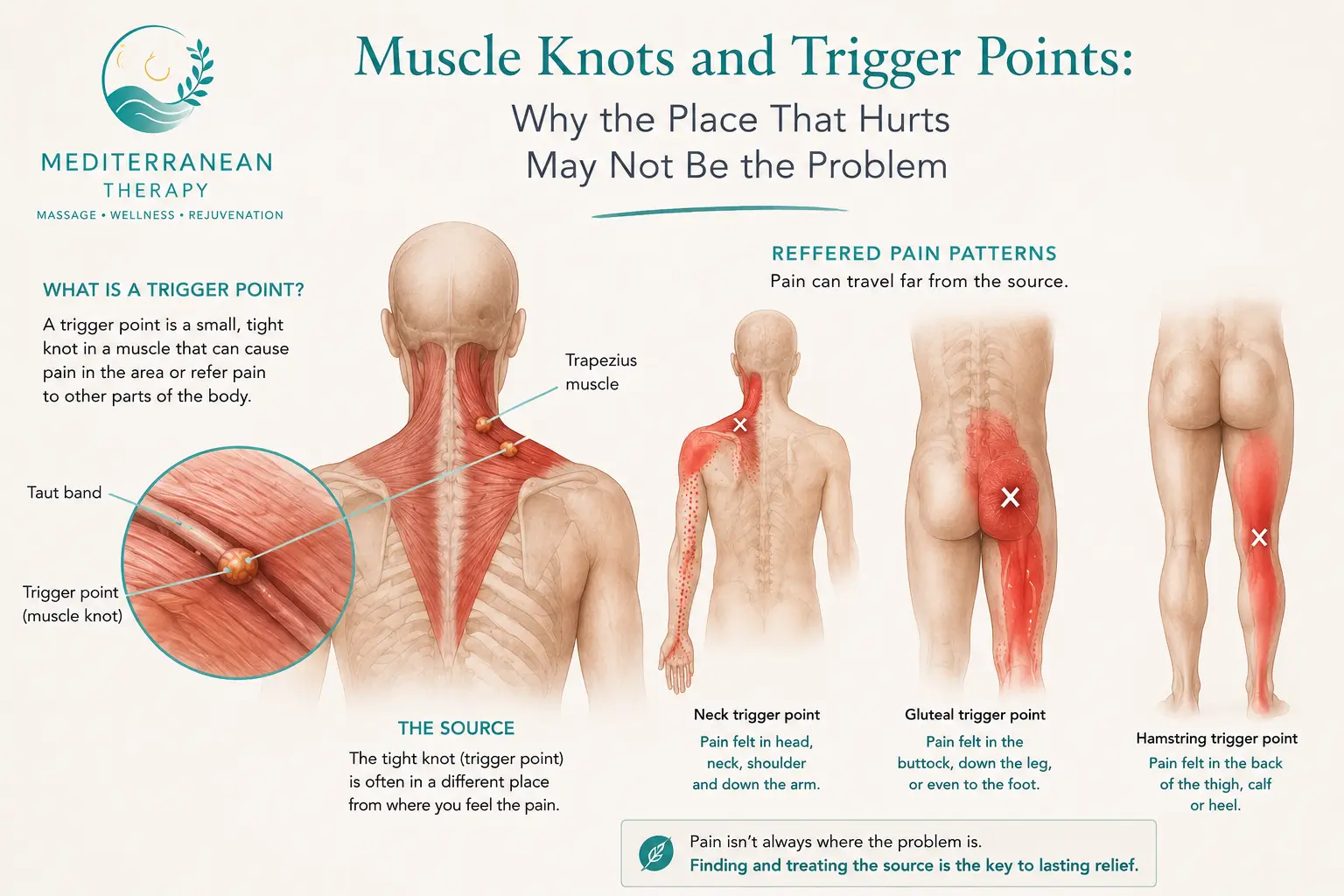
Muscle Knots and Trigger Points: Why the Place That Hurts May Not Be the Problem. You know the feeling.

There is one stubborn spot between your shoulder blades that always feels tight. You press it and think: “That’s the knot.”

Or perhaps your neck feels tense but the discomfort seems to travel into your shoulder. Maybe a particular spot in your upper back is tender when pressed yet somehow you feel the sensation somewhere else. These tender areas are often described as muscle knots.

Massage therapists may also use the term trigger point. But what exactly are they?

And perhaps more importantly:

Is the painful place always where the problem actually begins?

The answer is not necessarily.

Understanding this is one of the reasons a thoughtful massage treatment often involves looking beyond one painful spot.

Book your professional Massage in Bath.

What Is a Muscle Knot?

“Muscle knot” isn’t a precise anatomical term. People generally use it to describe a small area of muscle that feels unusually tight, hard, tender or sensitive.

You might notice one:

•  at the top of the shoulders
•  between the shoulder blades
•  around the neck
•  in the lower back
•  around the hips or glutes
•  in the calves
•  after exercise
•  after spending long periods at a desk.

Sometimes pressing the area feels satisfyingly tender.

Other times it produces discomfort somewhere completely different.

This is where the concept of trigger points becomes particularly interesting.

What Is a Trigger Point?

A myofascial trigger point is generally described as a sensitive spot within a taut area of skeletal muscle.

When pressure is applied, it may produce:

•  local tenderness
•  familiar muscular discomfort
•  pain somewhere nearby
•  or discomfort perceived in another area.

That last response is commonly referred to as referred pain.

For example, somebody may feel discomfort around the side of the head while a sensitive area of the neck is being palpated.

Or a point around the shoulder blade may reproduce sensations into the shoulder or arm.

However, the science of trigger points is more complicated than many social-media diagrams suggest.

There isn’t a tiny physical “knot” that a therapist simply crushes or removes.

Research into exactly what trigger points are, why they form and how reliably they can be identified is still developing.

So while the term is useful clinically and widely used within massage and musculoskeletal therapy, it is better to think of a trigger point as a sensitive area associated with muscular pain and altered sensitivity, rather than a literal knot tied inside the muscle.

What Is Referred Pain?

Referred pain means that discomfort is experienced somewhere other than or in addition to the area being stimulated or irritated.

This can seem strange.

Imagine your therapist works on a tender point near your shoulder blade and you suddenly say: “I can feel that in my neck.”

Nothing has physically travelled from one place to another.

Pain is an experience created by the nervous system, and the relationship between tissues, nerves, the spinal cord and the brain is complex.

Different pain mechanisms can produce symptoms away from the apparent source.

This is one reason that simply pointing to the place that hurts doesn’t always tell us the entire story.

Why the Painful Spot May Not Be the Only Area That Matters

Let’s take a common example.

Someone books a deep tissue massage in Bath because their right shoulder constantly feels tight.

They point to one exact location and say:

“Please work really deeply there. That’s where the problem is.”

It might indeed be an important area.

But there may be other relevant factors.

They might:

•  spend eight hours a day working on a laptop
•  frequently hold their phone between shoulder and ear
•  train their upper body several times per week
•  sleep predominantly on one side
•  have reduced movement through the neck or upper back
•  carry persistent muscular tension during periods of stress.

The tender point is therefore part of a much bigger picture.

Good massage therapy shouldn’t simply involve pressing harder and harder on one painful spot.

Why Do Muscle Knots Keep Coming Back?

This is one of the most common questions people ask. They have a massage. The tight area feels considerably better.

Then two weeks later: “The knot has come back.”

That doesn’t necessarily mean the massage failed.

Muscles respond to the demands placed upon them every day.

If the same loading pattern continues prolonged sitting, repetitive work, intense training, limited movement or stress-related muscle guarding it isn’t surprising if familiar areas become sensitive again.

The better question may therefore be: “What is repeatedly contributing to this area becoming uncomfortable?”

Sometimes massage is one useful part of that picture.

Movement, exercise, recovery, work setup and other lifestyle factors may also matter.

Are Trigger Points Caused by Bad Posture?

This needs a careful answer.

Posture is often blamed for practically every neck and shoulder problem.

You’ll frequently see claims such as:

“Poor posture causes knots.”

The human body is more adaptable than that.

There isn’t one perfect posture that everybody needs to maintain all day.

In reality, remaining in one position for a very long time may matter more than whether the posture looks technically perfect.

A beautifully positioned person who doesn’t move for four hours may still feel uncomfortable.

Someone sitting in a less-than-perfect position who changes posture frequently may feel perfectly fine.

For many desk workers, therefore, the practical message isn’t: “Sit perfectly straight all day.”

It’s: Move regularly.

Stress and Muscle Tension

Muscle tension isn’t only about physical activity.

Stress can change the way we hold our bodies.

Think about what happens during a difficult day.

Your shoulders may lift slightly.

Your jaw may tighten.

Your breathing may become shallower.

You may remain rigid in front of the computer without noticing.

Hours later, your neck and shoulders feel exhausted.

This is one reason massage can feel valuable even when somebody hasn’t sustained a specific injury.

The issue isn’t necessarily damaged tissue.

Sometimes the body has simply spent too much time in a heightened state of muscular tension.

Common Areas Where People Notice Muscle Knots

Neck and shoulders

Probably the area clients mention most frequently.

Long periods of screen use, repetitive arm activity, stress and everyday loading can all contribute to a feeling of neck and shoulder tightness.

Some sensitive muscular areas may also be associated with headaches or discomfort around the head.

Between the shoulder blades

People often describe a stubborn spot that they desperately want someone to “dig into”.

This area can certainly feel extremely satisfying to massage.

However, repeatedly attacking one point isn’t necessarily the most useful approach.

The neck, shoulders, upper back and movement of the shoulder blades may all be worth considering.

Lower back

The lower back contains multiple layers of muscles that work continuously during standing, bending and movement.

Tender or tight areas are common, particularly after unfamiliar activity.

Persistent or radiating lower-back pain, however, deserves appropriate assessment rather than automatically being labelled a muscle knot.

Glutes and hips

The gluteal muscles and deeper hip muscles can develop sensitive areas, particularly in people who run, train, sit for long periods or perform repetitive activity.

This connects closely with another topic we recently explored: piriformis-related pain and sciatica-like symptoms.

Not every painful glute is simply a trigger point — and pain travelling down the leg should not automatically be blamed on a tight muscle.

Trigger Points vs Sciatica or Nerve Pain

This distinction is particularly important.

Muscular pain may feel:

•  achy
•  tender
•  tight
•  sore
•  restricted

Nerve-related symptoms may be described as:

•  burning
•  electrical
•  shooting
•  tingling
•  numb
•  travelling

There can be overlap, so symptoms alone cannot provide a diagnosis.

If discomfort travels significantly down an arm or leg, particularly if you experience numbness or weakness, don’t assume somebody simply needs to “release the knot”.

Those symptoms may warrant assessment by a GP, physiotherapist or another appropriate healthcare professional.

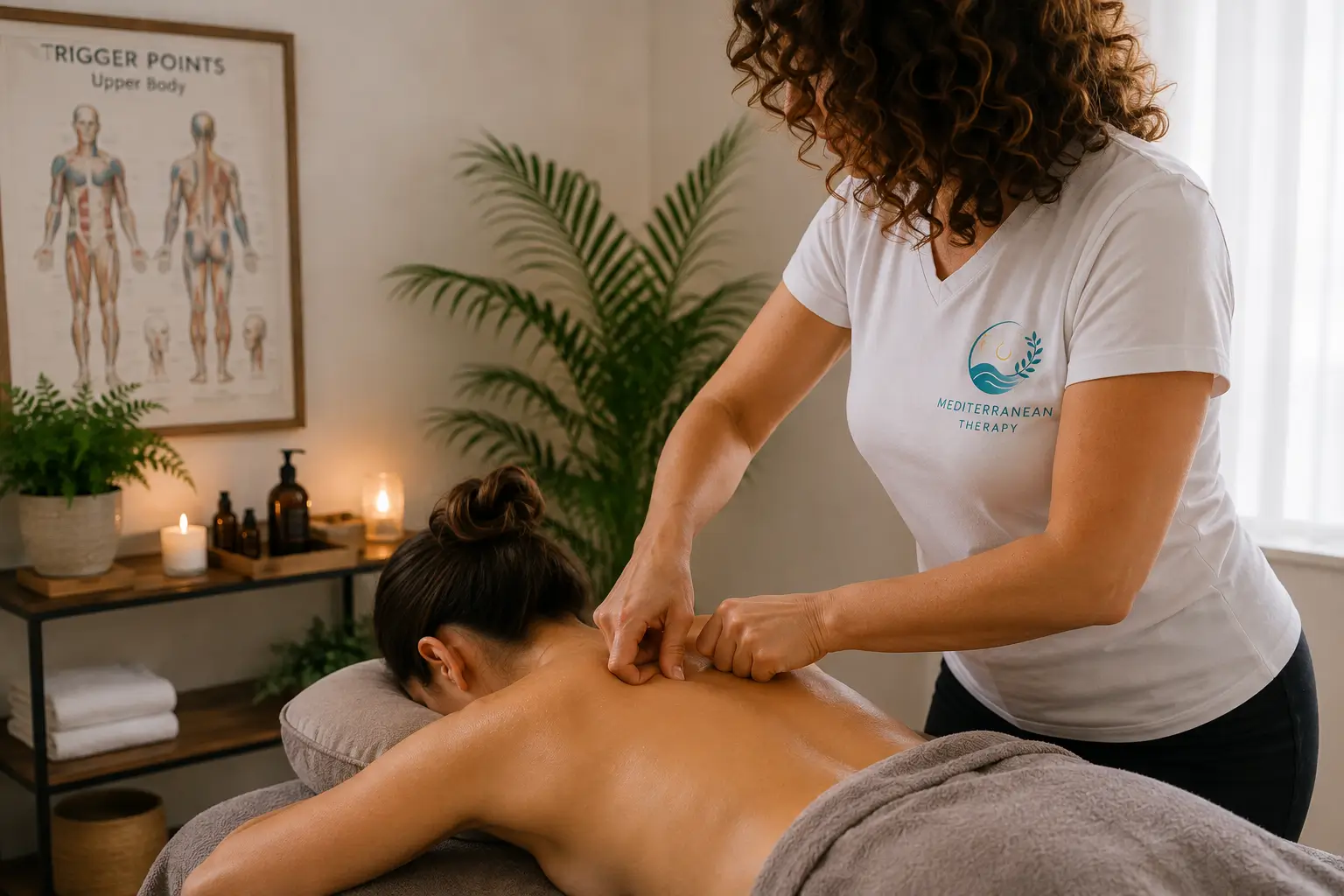
Can Massage Help Muscle Knots and Trigger Points?

Massage may help reduce muscular tension, soreness and sensitivity for some people.

Different approaches can be used depending on the person and the area involved.

These might include:

•  slower focused massage
•  sustained pressure
•  compression
•  soft tissue techniques
•  movement
•  stretching techniques
•  trigger point techniques
•  broader work around associated muscles

The treatment shouldn’t simply become a contest to see how much pressure the client can tolerate.

Sometimes a very sensitive area responds better to slower, more measured work.

Does Trigger Point Massage Need to Hurt?

No.

There is a persistent myth around massage:

“If it doesn’t hurt, it isn’t working.”

That’s not a good principle.

Focused work can certainly feel intense.

A client might describe the sensation as:

“good pain”

or

“that’s exactly the spot.”

But sharp, burning, electrical or unbearable pain isn’t something a therapist should simply push through.

Pressure should always be adapted.

Good communication between therapist and client matters more than achieving maximum intensity.

Deep Tissue Massage and Muscle Knots

People searching for a deep tissue massage in Bath often have a very specific expectation:

They want somebody to “really get into the knots”.

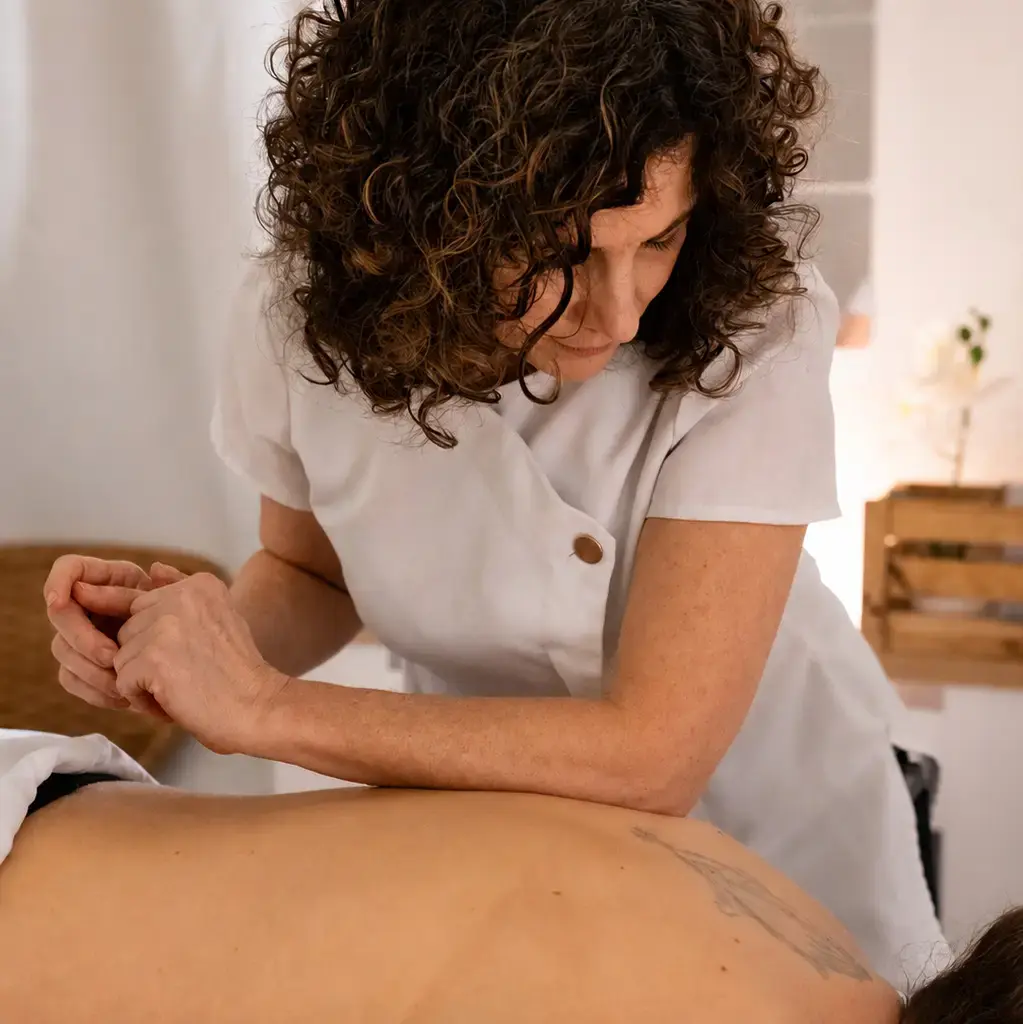
Deep tissue massage can certainly involve focused work on areas of muscular tension.

But deep tissue doesn’t simply mean hard massage.

A skilled treatment can use slower techniques and targeted pressure to work with deeper muscular layers while constantly responding to how the tissue and client react.

Sometimes forearms or elbows may be appropriate.

Sometimes fingertips or broad pressure work better.

Sometimes the surrounding muscles need more attention than the point the client initially identified.

The technique should serve the body not the other way around.

What About Sports Massage?

Another common misconception is that sports massage is only for athletes.

It isn’t.

The principles associated with sports and soft-tissue massage can be relevant to anyone experiencing muscular tightness from repetitive activity.

Your “sport” might be:

•  running
•  weight training
•  cycling
•  gardening
•  carrying children
•  working physically
•  or sitting at a computer all week.

Sports massage tends to be more targeted than a general relaxation treatment and may incorporate techniques aimed at particular muscles or movement-related areas.

Trigger point work can form part of that treatment when appropriate.

Frequently Asked Questions

“Muscle knot” is an informal term rather than a precise anatomical diagnosis. People usually use it to describe a tender or tight area of muscle. Such sensitive areas are real, although exactly what produces the sensation can vary.

The terms are often used interchangeably, although “trigger point” has a more specific meaning within myofascial pain terminology.

Sensitive muscular areas described as trigger points can be associated with pain perceived beyond the point being pressed. This is commonly described as referred pain.

Massage may reduce tenderness and muscular tension, but it is misleading to think of a knot as a physical object that can simply be broken up or removed.

Deep tissue massage can be useful for focused muscular tension, but the right amount of pressure varies between individuals. More pressure isn’t automatically more effective.

It may feel tender or intense, but treatment should remain tolerable. Sharp, burning or electrical pain is not something to simply push through.

Sports massage can incorporate focused soft tissue and trigger point techniques and may be useful for muscular tension related to training or everyday repetitive activity.

No. People with physically demanding jobs, desk-related muscle tension or general muscular tightness may also benefit from a targeted approach.

There may be ongoing factors such as repeated loading, work habits, exercise, stress or limited movement variety. Massage may provide relief, but sometimes it is useful to look at the wider pattern.

Symptoms involving significant numbness, weakness, persistent radiating pain, trauma or unexplained worsening discomfort should be appropriately assessed rather than automatically assumed to be a trigger point.

If you’re experiencing muscular tightness around your lower back, hips or glutes and are looking for a deep tissue massage or therapeutic massage in Bath, treatment can be adapted to your individual needs rather than following a standard routine.

Mediterranean Therapy offers personalised massage treatments in central Bath, including Deep Tissue Massage, therapeutic massage and Manual Lymphatic Drainage, with each treatment selected according to the client’s goals and suitability.

If you’re unsure which massage to book, simply get in touch and explain what you’re experiencing before your appointment.

Visit Me for Your Massage in Bath

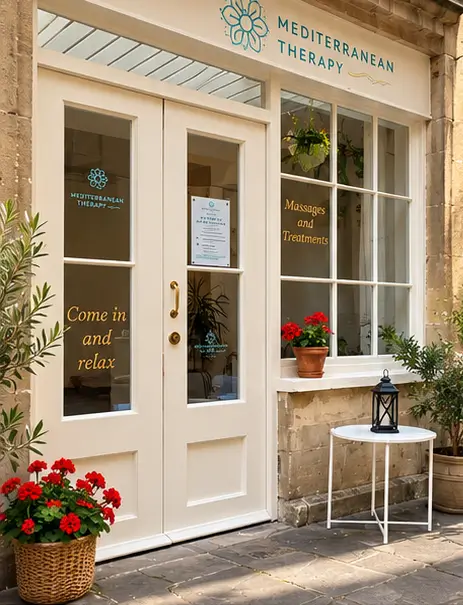
Enjoy your treatment at Mediterranean Therapy, located inside The Soul Spa a serene, centrally located wellness space in the heart of Bath:

📍 2 Hetling Court, Bath. Tel: 07378275075
👉 Click and get directions

Relax with a massage. Your expert massage therapist in Bath is ready to help you restore balance and calm, the best experience massage in Bath.

Teresa - Your Spa Therapist

Teresa - Your Spa Therapist

Massage therapist, facials and skincare with 5 star hotel experiences, an expert in a wide range of treatments.

Mediterranean Therapy
2 Hetling Court Bath - Tel: 07378275075

Massage Therapist Posts

Massage & Rejuvenation Services

  • Back, Neck & Shoulder
    Back, Neck & Shoulder

    30 mins – Click to Book!

    £ 35
  • Couple Massage
    Couple Massage

    1 hour – Click to Book!

    £ 140
  • Deep Tissue Massage
    Deep Tissue Massage

    1 hour – Click to Book!

    £ 70
  • Lymphatic Drainage Massage
    Lymphatic Drainage Massage

    1 hour – Click to Book!

    £ 70
  • Hot Stone Massage
    Hot Stone Massage

    1 hour – Click to Book!

    £ 70
  • Pregnancy Massage
    Pregnancy Massage

    1 hour – Click to Book!

    £ 70

Follow me on Social Media

Why Your Body Holds Stress Even When You Think You’re Relaxed

Why Your Body Holds Stress Even When You Think You’re Relaxed

“I’m Not Stressed…”  It’s one of the sentences I hear most often. “I’m not really stressed… I just have tight shoulders.” Or:

“I’ve always had neck pain.” Sometimes people come for a massage expecting me to focus on one painful area. Yet, after a few minutes of talking and a simple assessment, a different picture often begins to emerge. Their shoulders are constantly lifted. Their breathing is shallow. Their jaw is tight. Their body is carrying far more tension than they realised.

Many of us become so used to living with stress that we stop noticing it.

Book your professional Massage in Bath.

The Body Never Lies

Unlike the mind, the body has no reason to pretend everything is fine.

It quietly adapts. When life becomes busier, muscles work a little harder.

Breathing becomes a little shorter. Sleep becomes a little lighter.

None of these changes happen overnight. They develop gradually until they simply become “normal.”

This is often why people are surprised during their first massage. They realise how much tension they have been carrying without even noticing.

It’s Not Just About Tight Muscles

Stress doesn’t only affect the neck or shoulders.

Over time it can influence the entire body.

You may notice:

•  your jaw tightening while concentrating;
•  frequent headaches;
•  shoulders that always feel heavy;
•  a constant feeling of tiredness;
•  shallow breathing;
•  difficulty completely relaxing, even on holiday.

These are not necessarily signs of illness.

Sometimes they are simply your body’s way of asking for recovery.

One Thing I Often Notice During a Treatment

One thing I have learned over the years is that the place where someone feels pain is not always where the real tension begins.

A client may arrive because of neck pain, but the muscles that need the most attention may be across the shoulders, the upper back or even those involved in breathing.

This is why I never follow exactly the same routine.

Every session begins by understanding how your body is responding on that particular day.

Only then do I decide which techniques are most appropriate.

Sometimes Your Body Needs Calm More Than Pressure

Many people assume that stronger pressure always gives better results.

In reality, that’s not always the case.

For some clients, Deep Tissue Massage is exactly what the body needs to release long-standing muscular tension.

For others, especially when stress has left the nervous system constantly alert, a slower approach may be much more beneficial.

One treatment I particularly value is Manual Lymphatic Drainage (Vodder Method).

Although it is widely recognised for supporting the lymphatic system, the gentle, rhythmic movements of the Vodder Method are also associated with a calming response of the parasympathetic nervous system the part of our nervous system responsible for rest, recovery and relaxation.

Very often, clients tell me something interesting after this treatment.

They don’t simply say that their muscles feel looser.

They say:

“I feel lighter.”

“I can breathe properly again.”

“I haven’t felt this relaxed in months.”

For clients with more widespread muscular tightness, techniques such as Bamboo Massage may also be incorporated to release larger muscle groups while maintaining a comfortable, flowing rhythm.

Choosing the right treatment isn’t about selecting the strongest massage.

It’s about understanding what your body needs today.

Recovery Happens Between Appointments Too

Massage is only one part of looking after your body.

Sometimes the biggest difference comes from very small habits.

Taking one slow breath before answering another email.

Lowering your shoulders while driving.

Walking for ten minutes without checking your phone.

Giving yourself permission to pause.

These moments teach the body that it doesn’t always have to stay alert.

Perhaps Your Body Has Been Speaking for Longer Than You Realised

Our bodies are incredibly patient. They whisper before they shout. A little stiffness. A restless night. A headache. A tight jaw. Heavy shoulders.

These small signals are often invitations to slow down rather than simply push through another busy week.

Regular Massage Therapy in Bath isn’t only about treating pain.

For many people, it becomes an opportunity to reconnect with their body, breathe more deeply and rediscover what genuine relaxation actually feels like.

If your body has been trying to get your attention for some time, perhaps this is the moment to start listening.

Visit Me for Your Massage in Bath

Enjoy your treatment at Mediterranean Therapy, located inside The Soul Spa a serene, centrally located wellness space in the heart of Bath:

📍 2 Hetling Court, Bath. Tel: 07378275075
👉 Click and get directions

Relax with a massage. Your expert massage therapist in Bath is ready to help you restore balance and calm, the best experience massage in Bath.

Teresa - Your Spa Therapist

Teresa - Your Spa Therapist

Massage therapist, facials and skincare with 5 star hotel experiences, an expert in a wide range of treatments.

Mediterranean Therapy
2 Hetling Court Bath - Tel: 07378275075

Massage Therapist Posts

Massage & Rejuvenation Services

  • Back, Neck & Shoulder
    Back, Neck & Shoulder

    30 mins – Click to Book!

    £ 35
  • Couple Massage
    Couple Massage

    1 hour – Click to Book!

    £ 140
  • Deep Tissue Massage
    Deep Tissue Massage

    1 hour – Click to Book!

    £ 70
  • Lymphatic Drainage Massage
    Lymphatic Drainage Massage

    1 hour – Click to Book!

    £ 70
  • Hot Stone Massage
    Hot Stone Massage

    1 hour – Click to Book!

    £ 70
  • Pregnancy Massage
    Pregnancy Massage

    1 hour – Click to Book!

    £ 70

Follow me on Social Media

Massage for Gardeners: Relieving Back, Shoulder and Knee Pain After Summer Gardening

Massage for Gardeners: Relieving Back, Shoulder and Knee Pain After Summer Gardening

Gardening Is Good for You… But Your Body May Disagree. Gardening is one of the UK’s favourite outdoor activities. Whether you’re planting flowers, trimming hedges, mowing the lawn or carrying heavy bags of compost, spending time in the garden is a wonderful way to stay active and enjoy nature.

However, after several hours of repetitive movements, many people begin to notice stiffness in their back, aching shoulders or sore knees.

During the summer months, it’s common for clients seeking Massage Therapy in Bath to tell me they have “overdone it” in the garden. Often, the discomfort doesn’t appear until the following day, when muscles become tight and movement feels more restricted.

Book your professional Massage in Bath.

Why Gardening Can Leave You Feeling Stiff

Gardening involves many repetitive movements that place stress on muscles and joints.

Bending forward, kneeling for long periods, reaching overhead, lifting pots or pushing a lawn mower all require different muscle groups to work continuously.

Over time, these movements may contribute to tension in the lower back, shoulders, neck, forearms and hips. Even experienced gardeners can develop muscular tightness if they spend several hours working without taking regular breaks.

The discomfort is rarely caused by one single movement. More often, it is the result of small strains building up throughout the day.

The Areas Most Commonly Affected

Although every person is different, some areas tend to be affected more than others.

Many gardeners experience:

•  Lower back stiffness after prolonged bending.
•  Shoulder and neck tension from pruning or reaching overhead.
•  Tight forearms and wrists after gripping tools.
•  Hip and knee discomfort from kneeling or squatting.
•  Tired legs after standing or walking for long periods.

Looking at the body as a whole often helps explain why pain appears in places that may seem unrelated to the activity itself.

How Massage Therapy Can Help Recovery

Massage therapy can help reduce muscular tension, improve flexibility and encourage relaxation after physical activity.

Rather than concentrating only on the area that feels uncomfortable, I assess how different muscles are working together. Often, when one area becomes overloaded, other muscles compensate, creating patterns of tension throughout the body.

Helping these muscles relax may improve comfort, restore easier movement and support recovery after a busy day in the garden.

Every treatment is tailored to the individual, depending on how your body is responding.

Choosing the Right Massage After Gardening

The most suitable treatment depends on the type of muscular tension you are experiencing.

For deeper muscular tightness in the back, shoulders or legs, Deep Tissue Massage may help release long-standing restrictions and improve mobility.

When larger muscle groups have become tired after repetitive physical work, Bamboo Massage can provide broad, flowing pressure that many clients find both effective and deeply relaxing.

If long hours standing have left your legs feeling heavy or slightly swollen, Manual Lymphatic Drainage (Vodder Method) may also be beneficial. While it is widely recognised for supporting the lymphatic system, its gentle, rhythmic movements are also associated with a calming effect on the parasympathetic nervous system. Many clients describe feeling lighter, deeply relaxed and noticeably less tense after treatment.

Rather than recommending the same massage for everyone, an experienced Massage Therapist in Bath will choose the techniques that best match your body’s needs.

Looking After Your Body While Gardening

A few simple habits can make a real difference:

•  Change your position regularly instead of staying bent over for long periods.
•  Kneel on a padded garden cushion when possible.
•  Lift heavy pots by bending your knees rather than your back.
•  Stretch your shoulders, hips and lower back before and after gardening.
•  Stay hydrated, especially during warm summer weather.
•  Break large gardening projects into shorter sessions.

These small adjustments can help reduce the build-up of muscular tension and make gardening much more enjoyable.

Enjoy Your Garden Without the Aches

Gardening should leave you feeling satisfied not struggling to move the next day.

Regular Massage Therapy in Bath can help your body recover from the physical demands of gardening by reducing muscle tension, encouraging relaxation and improving overall mobility.

Whether you’ve spent the weekend redesigning your garden or simply enjoyed a few hours caring for your plants, taking care of your body is just as important as taking care of your garden.

If you’d like to understand how regular massage can support an active lifestyle, you may also enjoy reading Why Regular Massage Should Be Part of Your Wellness Routine.

Visit Me for Your Massage in Bath

Enjoy your treatment at Mediterranean Therapy, located inside The Soul Spa a serene, centrally located wellness space in the heart of Bath:

📍 2 Hetling Court, Bath. Tel: 07378275075
👉 Click and get directions

Relax with a massage. Your expert massage therapist in Bath is ready to help you restore balance and calm, the best experience massage in Bath.

Teresa - Your Spa Therapist

Teresa - Your Spa Therapist

Massage therapist, facials and skincare with 5 star hotel experiences, an expert in a wide range of treatments.

Mediterranean Therapy
2 Hetling Court Bath - Tel: 07378275075

Massage Therapist Posts

Massage & Rejuvenation Services

  • Back, Neck & Shoulder
    Back, Neck & Shoulder

    30 mins – Click to Book!

    £ 35
  • Couple Massage
    Couple Massage

    1 hour – Click to Book!

    £ 140
  • Deep Tissue Massage
    Deep Tissue Massage

    1 hour – Click to Book!

    £ 70
  • Lymphatic Drainage Massage
    Lymphatic Drainage Massage

    1 hour – Click to Book!

    £ 70
  • Hot Stone Massage
    Hot Stone Massage

    1 hour – Click to Book!

    £ 70
  • Pregnancy Massage
    Pregnancy Massage

    1 hour – Click to Book!

    £ 70

Follow me on Social Media

Digital Stress Syndrome: Why Your Body Needs More Than Just a Break from the Screen

Digital Stress Syndrome: Why Your Body Needs More Than Just a Break from the Screen

When Switching Off Feels Impossible. 

Have you ever finished a working day feeling completely drained, even though you’ve barely moved from your chair?

Many of us spend hours moving between laptops, phones, tablets and video calls. Our minds remain constantly engaged while our bodies stay in the same position for far too long. Over time, this combination creates what many people now describe as digital stress.

More and more clients looking for Massage Therapy in Bath tell me the same thing: “I’m not just tired my whole body feels tense.”

If you’d like to learn more about why regular massage can become part of a healthier lifestyle, you may also enjoy reading Why Regular Massage Should Be Part of Your Wellness Routine.

Book your professional Massage in Bath.

Your Body Is Listening to Every Hour You Spend at Your Desk

Digital stress isn’t only mental. It gradually changes the way your body moves and feels.

As concentration increases, breathing often becomes shallower. The shoulders slowly lift towards the ears, the neck moves forward and the upper back becomes stiff. Even the jaw may tighten without you noticing.

At first these changes seem insignificant, but after weeks or months they can contribute to headaches, neck pain, shoulder stiffness, tired eyes and a constant feeling of fatigue.

Often, the discomfort people notice is simply the final signal of tension that has been building for a long time.

Stress Lives in the Nervous System as Well as the Muscles

One of the most overlooked effects of digital overload is what it does to the nervous system.

When your brain is constantly processing information, answering messages and reacting to notifications, your body rarely has the opportunity to enter a truly relaxed state.

This is why many people experience restless sleep, feel mentally exhausted or struggle to fully unwind, even during weekends or holidays.

Massage cannot remove the demands of everyday life, but it can help create the conditions where your body remembers how to relax again.

A Personalised Massage Makes the Difference

No two people carry stress in exactly the same way.

Some feel it mainly in the neck, others across the shoulders, lower back or even through the muscles involved in breathing. For this reason, I never believe in following exactly the same routine for every client.

Each session begins by listening to your symptoms, your daily routine and how your body responds to gentle movement and touch. The treatment is then adapted to what your body needs that day, helping release tension while encouraging a slower, calmer breathing pattern.

Sometimes the greatest change isn’t simply less pain. It’s feeling lighter, calmer and more present.

Choosing the Right Massage for Digital Fatigue

Different techniques can support different types of tension.

For deeper muscular tightness caused by prolonged sitting or repetitive posture, Deep Tissue Massage may help release long-standing restrictions. uk)

If your body feels generally tense and your mind struggles to slow down, a relaxing therapeutic massage may be the most beneficial approach.

Where larger muscle groups need attention, Bamboo Massage can provide broad, flowing pressure that many clients find both effective and deeply relaxing.

For those who also experience heaviness or fluid retention during stressful periods, Manual Lymphatic Drainage may offer a gentler approach that supports overall wellbeing.

Rather than choosing a treatment based only on its name, a qualified Massage Therapist in Bath will help identify the approach most suited to your individual needs.

Small Daily Habits That Help Between Treatments

Massage works best as part of a wider approach to wellbeing.

Simple habits standing up every hour, stretching your chest, lowering your shoulders, taking slow breaths and spending a few minutes away from your phone can reduce the physical effects of digital stress.

Perfection isn’t necessary. Small, consistent changes are often enough to help your body recover more easily between treatments.

Looking After Your Body in a Digital World

Technology is part of modern life, and most of us cannot simply switch it off.

What we can do is become more aware of how it affects our posture, our breathing and our overall wellbeing.

Regular Massage Therapy in Bath isn’t simply about relieving today’s aches and pains. It can become part of a healthier routine that helps you manage stress before it develops into persistent discomfort.

If you’re unsure which treatment would be most suitable, I’m always happy to discuss your symptoms and recommend an approach tailored to your needs.

Sometimes the most valuable part of a massage isn’t the hour spent on the treatment couch.

It’s leaving the session standing a little taller, breathing a little deeper and remembering how good it feels when your body and mind finally slow down together.

Visit Me for Your Massage in Bath

Enjoy your treatment at Mediterranean Therapy, located inside The Soul Spa a serene, centrally located wellness space in the heart of Bath:

📍 2 Hetling Court, Bath. Tel: 07378275075
👉 Click and get directions

Relax with a massage. Your expert massage therapist in Bath is ready to help you restore balance and calm, the best experience massage in Bath.

Teresa - Your Spa Therapist

Teresa - Your Spa Therapist

Massage therapist, facials and skincare with 5 star hotel experiences, an expert in a wide range of treatments.

Mediterranean Therapy
2 Hetling Court Bath - Tel: 07378275075

Massage Therapist Posts

Massage & Rejuvenation Services

  • Back, Neck & Shoulder
    Back, Neck & Shoulder

    30 mins – Click to Book!

    £ 35
  • Couple Massage
    Couple Massage

    1 hour – Click to Book!

    £ 140
  • Deep Tissue Massage
    Deep Tissue Massage

    1 hour – Click to Book!

    £ 70
  • Lymphatic Drainage Massage
    Lymphatic Drainage Massage

    1 hour – Click to Book!

    £ 70
  • Hot Stone Massage
    Hot Stone Massage

    1 hour – Click to Book!

    £ 70
  • Pregnancy Massage
    Pregnancy Massage

    1 hour – Click to Book!

    £ 70

Follow me on Social Media

Why Am I Always Tired Even After Sleeping? Can Massage Help?

Why Am I Always Tired Even After Sleeping? Can Massage Help?

Why do I still feel tired even after sleeping? Have you ever slept for seven or eight hours and still woken up feeling exhausted? Many people experience periods where they constantly feel tired, low in energy or mentally drained, even when they believe they are getting enough sleep.

Feeling tired occasionally is completely normal, especially during busy periods of life. However, when fatigue becomes frequent, many people begin wondering why their energy never seems to fully return.

Book your professional Massage in Bath.

Sleep is not always the only reason

Many people assume that tiredness only happens because they are not sleeping enough. However, fatigue can sometimes be influenced by several factors including stress, demanding routines, physical effort, poor sleep quality, hormonal changes and lifestyle habits.

Diet and eating patterns may also play a role. Heavy meals, highly processed foods and irregular eating habits can sometimes affect energy levels and influence how the body feels throughout the day. Including fresh foods such as fruit, vegetables and balanced meals may help support overall wellbeing and maintain more stable energy levels.

For some women, hormonal fluctuations may also contribute to changes in energy, mood and sleep quality during certain phases of the menstrual cycle.

Sleep quality itself can also affect how rested we feel. Some people experience disturbances during the night such as snoring or sleep apnoea, which may interrupt normal sleep cycles. Frequent interruptions during sleep can sometimes reduce the feeling of rest and leave people feeling tired throughout the day, even after several hours in bed.

Stress and daily routines can affect energy levels

Modern life often keeps the body in a constant state of activity. Long working hours, physically demanding jobs, family responsibilities and everyday pressures can gradually create tension in both the body and mind.

When stress levels remain elevated for long periods, muscles may stay tense and the body can begin feeling physically and mentally exhausted.

Can physical tension make you feel more tired?

Many people notice tight shoulders, neck discomfort, muscle fatigue or a sensation of heaviness when they feel stressed or overwhelmed. Physical tension itself may sometimes contribute to low energy levels.

When the body continuously works harder than necessary to hold stress and muscular tension, it may leave us feeling drained throughout the day.

When should tiredness not be ignored?

Occasional tiredness is common, but persistent fatigue, significant changes in energy levels or symptoms affecting everyday life should always be discussed with a healthcare professional.

Understanding possible causes is important, particularly if tiredness continues for long periods without an obvious reason.

What can help support better wellbeing and recovery?

Small daily habits can sometimes make a meaningful difference. Gentle movement, spending time outdoors and creating moments of rest throughout the day may help support both body and mind.

Practices such as breathing exercises, meditation and mindfulness may also help calm the nervous system and encourage relaxation. Taking a few moments each day to slow down and focus on breathing can sometimes help reduce feelings of mental overload.

Prioritising self-care can also be important. Maintaining balanced eating habits with fresh foods, fruit and vegetables, staying hydrated, creating healthy sleep routines and allowing time for activities that support physical and mental recovery may all contribute to overall wellbeing.

Can massage help when you feel tired?

Massage therapy may help encourage relaxation and support overall wellbeing. Different massage techniques can support different needs depending on how the body and mind are feeling.

A Swedish massage often focuses on relaxation and gentler movements that help the body slow down and release overall tension.

Deep tissue massage uses slower and more focused techniques that may help where physical tension has built up over time.

Manual Lymphatic Drainage, including the Vodder method, uses gentle and rhythmic techniques that may encourage relaxation and help support the parasympathetic nervous system often known as the body’s “rest and recovery” response.

For some people, hormonal changes may influence sleep quality, mood and overall energy levels. While Manual Lymphatic Drainage does not directly regulate hormones, the relaxing effects of the treatment may help create a greater sense of calm and wellbeing, particularly during periods when stress and physical tension are also contributing factors.

In our massage studio in Bath, many clients choose treatments as part of a self-care routine when stress, muscular tension and daily demands begin affecting how they feel. If you are looking for massage therapy in Bath, choosing a treatment tailored to your individual needs may help support relaxation and overall wellbeing.

Visit Me for Your Massage in Bath

Enjoy your treatment at Mediterranean Therapy, located inside The Soul Spa a serene, centrally located wellness space in the heart of Bath:

📍 2 Hetling Court, Bath. Tel: 07378275075
👉 Click and get directions

Relax with a massage. Your expert massage therapist in Bath is ready to help you restore balance and calm, the best experience massage in Bath.

Teresa - Your Spa Therapist

Teresa - Your Spa Therapist

Massage therapist, facials and skincare with 5 star hotel experiences, an expert in a wide range of treatments.

Mediterranean Therapy
2 Hetling Court Bath - Tel: 07378275075

Massage Therapist Posts

Massage & Rejuvenation Services

  • Back, Neck & Shoulder
    Back, Neck & Shoulder

    30 mins – Click to Book!

    £ 35
  • Couple Massage
    Couple Massage

    1 hour – Click to Book!

    £ 140
  • Deep Tissue Massage
    Deep Tissue Massage

    1 hour – Click to Book!

    £ 70
  • Lymphatic Drainage Massage
    Lymphatic Drainage Massage

    1 hour – Click to Book!

    £ 70
  • Hot Stone Massage
    Hot Stone Massage

    1 hour – Click to Book!

    £ 70
  • Pregnancy Massage
    Pregnancy Massage

    1 hour – Click to Book!

    £ 70

Follow me on Social Media

Is Deep Tissue Massage Suitable for Everyone?

Is Deep Tissue Massage Suitable for Everyone?

What Is Deep Tissue Massage?  Deep tissue massage is a treatment designed to target deeper layers of muscles and connective tissue using slow, firm pressure and focused techniques. It is commonly chosen by people experiencing chronic muscle tension, postural discomfort, or sports-related tightness.

Unlike a relaxing Swedish massage, deep tissue massage works more intensely on specific areas of tension and restriction. At Mediterranean Therapy, this form of Massage Therapy is always adapted to the client’s individual needs and comfort levels.

Although highly effective for many people, deep tissue massage is not necessarily suitable for everyone.

Book your professional Massage in Bath.

The Main Benefits of Deep Tissue Massage

When performed correctly, deep tissue massage can offer several physical and mental benefits.

These may include:

• Relief from chronic muscle tension
• Improved mobility and flexibility
• Better circulation
• Reduced stiffness after physical activity
• Support for posture-related discomfort

Many clients seek a Massage Therapist in Bath specifically for deep tissue work because it can help release long-standing areas of tightness that lighter massages may not fully address.

As discussed in our wellness article, regular massage treatments can become an important part of maintaining overall wellbeing and body balance.

Who Can Benefit Most from Deep Tissue Massage?

Deep tissue massage is often beneficial for people with physically demanding lifestyles or ongoing muscular tension.

It may be suitable for:

• Office workers with neck and shoulder tension
• Athletes and active individuals
• Clients with postural imbalances
• People experiencing lower back tightness
• Those recovering from repetitive strain

A professional Massage Therapist in Bath will always assess the body carefully before deciding whether deep tissue techniques are appropriate.

When Deep Tissue Massage May Not Be Suitable

Although deep tissue massage offers many benefits, there are situations where it should be avoided or modified.

It may not be suitable for people with:

• Fibromyalgia or extreme sensitivity to pressure
• Recent injuries or inflammation
• Certain circulatory conditions
• Severe osteoporosis
• Recent surgery or healing tissues

Acute pain flare-ups

In these cases, gentler forms of Massage Therapy in Bath may provide better results without overstimulating the nervous system or aggravating symptoms.

Does Deep Tissue Massage Have to Be Painful?

One of the biggest misconceptions is that deep tissue massage must be painful to be effective.

In reality, effective treatment does not mean excessive pressure. A skilled Massage Therapist in Bath understands how to work deeply without causing unnecessary discomfort.

Some tenderness during treatment can be normal, especially around tight muscles, but the experience should always remain manageable and controlled.

Communication between client and therapist is essential to ensure the pressure stays appropriate throughout the session.

The Importance of a Personalised Treatment

No two bodies respond the same way to massage therapy. This is why treatments should always be personalised rather than following a fixed routine.

At Mediterranean Therapy, each session is adapted based on:

• Pain sensitivity
• Lifestyle and activity levels
• Existing tension patterns
• Medical history
• Stress levels and recovery needs

This tailored approach helps ensure that deep tissue massage remains both safe and effective.

Finding the Right Balance for Your Body

Deep tissue massage can be incredibly beneficial when used appropriately, but stronger pressure is not always the answer. Sometimes the body responds better to slower, gentler techniques that encourage relaxation rather than intensity.

The key is choosing the right treatment for your individual needs and working with an experienced Massage Therapist who understands how to adapt each session carefully.

As part of a balanced wellness routine, massage therapy can help support both physical recovery and long-term wellbeing when approached thoughtfully and consistently.

Visit Me for Your Massage in Bath

Enjoy your treatment at Mediterranean Therapy, located inside The Soul Spa a serene, centrally located wellness space in the heart of Bath:

📍 2 Hetling Court, Bath. Tel: 07378275075
👉 Click and get directions

Relax with a massage. Your expert massage therapist in Bath is ready to help you restore balance and calm, the best experience massage in Bath.

Teresa - Your Spa Therapist

Teresa - Your Spa Therapist

Massage therapist, facials and skincare with 5 star hotel experiences, an expert in a wide range of treatments.

Mediterranean Therapy
2 Hetling Court Bath - Tel: 07378275075

Massage Therapist Posts

Massage & Rejuvenation Services

  • Back, Neck & Shoulder
    Back, Neck & Shoulder

    30 mins – Click to Book!

    £ 35
  • Couple Massage
    Couple Massage

    1 hour – Click to Book!

    £ 140
  • Deep Tissue Massage
    Deep Tissue Massage

    1 hour – Click to Book!

    £ 70
  • Lymphatic Drainage Massage
    Lymphatic Drainage Massage

    1 hour – Click to Book!

    £ 70
  • Hot Stone Massage
    Hot Stone Massage

    1 hour – Click to Book!

    £ 70
  • Pregnancy Massage
    Pregnancy Massage

    1 hour – Click to Book!

    £ 70

Follow me on Social Media

What Is Sports Massage? Benefits, Techniques and Differences from Deep Tissue

What Is Sports Massage? Benefits, Techniques and Differences from Deep Tissue

Understanding Sports Massage. Sports massage is a specialised form of massage therapy designed to support people who are physically active. Despite the name, it is not only for athletes it can also benefit anyone who exercises regularly or experiences muscle tension from repetitive movement.

This type of treatment focuses on muscles used during physical activity, helping to improve flexibility, reduce tension, and support recovery.

Sports massage is often discussed as a more targeted and functional approach compared to relaxation-based treatments.

Book your professional Massage in Bath.

Who Is Sports Massage For?

Sports massage is commonly associated with athletes, but its benefits extend to a wider group of people.

It may be suitable for:

• gym-goers and fitness enthusiasts
• runners and cyclists
• people with physically demanding jobs
• individuals with muscle tightness from repetitive movements
• those preparing for or recovering from physical activity

A qualified Massage Therapist trained in sports techniques typically adapts the treatment depending on the individual’s level of activity and physical condition.

Techniques Used in Sports Massage

Sports massage includes a combination of techniques designed to target deeper layers of muscle and connective tissue.

These may include:

• deep pressure techniques
• stretching and mobilisation
• trigger point work
• rhythmic compression
• friction techniques

The intensity of the treatment can vary depending on whether the goal is preparation, recovery, or maintenance.

Key Benefits of Sports Massage

Sports massage is often used to support physical performance and recovery.

Potential benefits include:

• improved flexibility and range of motion
• reduced muscle stiffness
• support for recovery after exercise
• relief from muscle tension
• improved circulation

It is important to note that results can vary depending on the individual, the condition of the muscles, and how regularly the treatment is received.

Sports Massage vs Deep Tissue Massage

Sports massage is often compared to Deep Tissue Massage, but the two are not exactly the same.

Deep Tissue Massage generally focuses on releasing chronic tension in deeper muscle layers. It is often slower and concentrates on specific areas of tightness or discomfort.

Sports Massage, on the other hand, is more functional and goal-oriented. It may include movement, stretching, and techniques adapted to physical activity.

In simple terms:

• Deep tissue → focuses on tension and muscle knots
• Sports massage → focuses on performance, movement, and recovery

Both treatments can involve firm pressure, but their purpose and approach are different.

When Should Sports Massage Be Used?

Sports massage can be used at different stages of physical activity:

• Before activity → to prepare muscles and improve mobility
• After activity → to support recovery and reduce tightness
• Regular maintenance → to help prevent muscle imbalances

However, it may not always be suitable in cases of acute injury, inflammation, or certain medical conditions. In those situations, professional advice should always be sought.

A Balanced Approach to Massage Therapy

Understanding the differences between treatments such as sports massage and deep tissue massage can help individuals choose the most appropriate approach for their needs.

Within the broader context of Massage Therapy, each technique has a different purpose. Some treatments focus on relaxation, while others are more targeted and functional.

A knowledgeable Massage Therapist will always consider the client’s condition, lifestyle, and goals before recommending a specific approach.

Visit Me for Your Massage in Bath

Enjoy your treatment at Mediterranean Therapy, located inside The Soul Spa a serene, centrally located wellness space in the heart of Bath:

📍 2 Hetling Court, Bath. Tel: 07378275075
👉 Click and get directions

Relax with a massage. Your expert massage therapist in Bath is ready to help you restore balance and calm, the best experience massage in Bath.

Teresa - Your Spa Therapist

Teresa - Your Spa Therapist

Massage therapist, facials and skincare with 5 star hotel experiences, an expert in a wide range of treatments.

Mediterranean Therapy
2 Hetling Court Bath - Tel: 07378275075

Massage Therapist Posts

Massage & Rejuvenation Services

  • Back, Neck & Shoulder
    Back, Neck & Shoulder

    30 mins – Click to Book!

    £ 35
  • Couple Massage
    Couple Massage

    1 hour – Click to Book!

    £ 140
  • Deep Tissue Massage
    Deep Tissue Massage

    1 hour – Click to Book!

    £ 70
  • Lymphatic Drainage Massage
    Lymphatic Drainage Massage

    1 hour – Click to Book!

    £ 70
  • Hot Stone Massage
    Hot Stone Massage

    1 hour – Click to Book!

    £ 70
  • Pregnancy Massage
    Pregnancy Massage

    1 hour – Click to Book!

    £ 70

Follow me on Social Media

When the Body Accumulates: Stress, Posture and Muscle Tension Over Time

When the Body Accumulates: Stress, Posture and Muscle Tension Over Time

Modern life places constant demands on the body, often without us even realising it.  Long hours sitting, poor posture, repetitive movements and emotional stress create ongoing muscular tension. At first, the body adapts. Then it compensates… and eventually, it starts to accumulate.

Over time, this leads to stiffness, discomfort and restricted movement.

Book your professional Massage in Bath.

Muscles Under Constant Stress

Muscles are not designed to stay contracted all day.

When they do:

    • • some areas become overworked
    • • others weaken
    • • imbalances develop

Common areas affected:

    • • back
    • • neck
    • • shoulders

Deep Tissue Massage is highly effective in these cases, working deeply to release long-standing tension.

In my Massage Therapies studio in Bath, I often see how small, ignored signals gradually turn into deep and difficult-to-treat tension.

Circulation and Build-Up

Tight muscles restrict both blood and lymphatic flow.

This leads to:

    • • reduced oxygen supply
    • • fewer nutrients
    • • accumulation of metabolic waste

Resulting in:

    • • heaviness
    • • stiffness
    • • fatigue

Lymphatic Drainage Massage helps stimulate the lymphatic system and supports the body’s natural recovery process.

When Tension Becomes Chronic

If this continues over time:

    • • the nervous system remains in a constant state of tension
    • • muscles lose their ability to relax
    • • discomfort becomes persistent

At this stage, it becomes more than just temporary pain.

Why Releasing Tension Matters

Regular treatments help to:

    • • improve circulation
    • • restore fascia mobility
    • • support muscle function

As a Massage Therapist, I clearly see how consistent work helps not only reduce pain, but also prevent it from returning.

A Complete Approach: Treatment and Prevention

Incorporating treatments such as:

    • • Deep Tissue Massage
    • • Lymphatic Drainage Massage

into your routine helps:

    • • reduce accumulated stress
    • • improve movement quality
    • • prevent long-term issues

My approach is to support long-term wellbeing, not just provide temporary relief.

Final Thought

The body doesn’t create tension randomly.

Every restriction has a reason.

Listening to it early is what prevents pain later.

Visit Me for Your Massage in Bath

Enjoy your treatment at Mediterranean Therapy, located inside The Soul Spa a serene, centrally located wellness space in the heart of Bath:

📍 2 Hetling Court, Bath. Tel: 07378275075
👉 Click and get directions

Relax with a massage. Your expert massage therapist in Bath is ready to help you restore balance and calm, the best experience massage in Bath.

Teresa - Your Spa Therapist

Teresa - Your Spa Therapist

Massage therapist, facials and skincare with 5 star hotel experiences, an expert in a wide range of treatments.

Mediterranean Therapy
2 Hetling Court Bath - Tel: 07378275075

Massage Therapist Posts

Massage & Rejuvenation Services

  • Back, Neck & Shoulder
    Back, Neck & Shoulder

    30 mins – Click to Book!

    £ 35
  • Couple Massage
    Couple Massage

    1 hour – Click to Book!

    £ 140
  • Deep Tissue Massage
    Deep Tissue Massage

    1 hour – Click to Book!

    £ 70
  • Lymphatic Drainage Massage
    Lymphatic Drainage Massage

    1 hour – Click to Book!

    £ 70
  • Hot Stone Massage
    Hot Stone Massage

    1 hour – Click to Book!

    £ 70
  • Pregnancy Massage
    Pregnancy Massage

    1 hour – Click to Book!

    £ 70

Follow me on Social Media

Deep Pressure & Muscle Tension

Deep Pressure & Muscle Tension

Releasing Muscle Knots and Deep Tension: How Targeted Massage Can Restore Comfort and Movement.  Muscle tension, stiffness and persistent knots are among the most common reasons people seek massage therapy. At Mediterranean Therapy in Bath, many clients come to us feeling tight, restricted or uncomfortable in areas such as the neck, shoulders, lower back and hips often after long hours at a desk, stressful periods or physical activity. In these cases, relaxation massage alone is sometimes not enough. This is where deep pressure and targeted massage techniques can make a real difference. In this article, we explain what muscle knots are, how deep pressure massage works, and how personalised treatments can help release tension, improve movement and support long-term wellbeing. Book your professional Massage in Bath.

What Are Muscle Knots and Areas of Tension?

Muscle knots are areas of tight, contracted muscle fibres that develop when a muscle remains tense for a long time.

They are commonly caused by:

• Poor posture

• Repetitive movements

• Long hours sitting or working at a desk

• Stress and emotional tension

• Sports or overuse activity

These areas of tension may cause:

• Local muscle pain or tenderness

• A feeling of stiffness or heaviness

• Reduced flexibility and movement

• Discomfort that can spread to nearby areas

Many people describe them as “deep knots” that never seem to fully relax.

What Is Deep Pressure Massage?

Deep pressure massage focuses on the deeper layers of muscle and connective tissue, using slow, controlled movements and sustained pressure.

Unlike relaxation massage, which is mainly soothing and flowing, deep pressure techniques are designed to:

• Release stubborn areas of tension

• Improve circulation within the muscles

• Encourage the tissue to soften and relax

• Restore comfort and natural movement

The pressure is always adapted to your comfort level, and communication with your therapist is essential to ensure the treatment remains both effective and relaxing.

How Targeted Massage Techniques Help Release Tension

At Mediterranean Therapy, every treatment is fully personalised.

When areas of muscle tension or knots are found, your therapist will:

• Take time to explore the area carefully

• Apply slow, controlled and focused pressure

• Work gently and deeply to encourage the muscle fibres to release

• Support healthy blood flow and tissue relaxation

This approach helps to:

• Reduce stiffness and tightness

• Improve flexibility and posture

• Ease muscular discomfort

• Support long-term muscle health

Although these techniques can sometimes feel intense, they should never be painful. The aim is always to create a comfortable and therapeutic release.

Conditions That May Benefit from Deep Pressure Massage

Targeted massage techniques can be particularly helpful for people experiencing:

• Neck and shoulder tension

• Lower back discomfort

• Hip and glute tightness

• Postural imbalances

• Office-related muscle strain

• Sports-related tension and fatigue

Many clients at Mediterranean Therapy in Bath notice improved comfort and movement after just one session, with deeper and longer-lasting results through regular treatments.

Is Deep Pressure Massage Right for Everyone?

Deep pressure massage is highly effective, but it may not be suitable for everyone.

It may not be recommended if you have:

• Acute inflammation or infection

• Certain medical conditions

• Very sensitive or fragile tissues

• Specific stages of pregnancy

For this reason, every session at Mediterranean Therapy begins with a full consultation, allowing us to choose the safest and most appropriate treatment for your individual needs.

A Personalised Approach at Mediterranean Therapy

Every body is different.

At Mediterranean Therapy, we combine:

• Deep pressure techniques

• Swedish massage movements

• Relaxation and circulation-boosting strokes

to create a bespoke massage experience tailored to your body and your goals.

Our aim is not only to relieve tension, but also to:

• Improve posture and mobility

• Reduce muscular fatigue

• Promote relaxation and wellbeing

• Help you reconnect with your body

Deep Pressure Massage in Bath at Mediterranean Therapy

If you are experiencing persistent muscle tension or stiffness, professional massage therapy can make a real difference.

Our studio is located in the heart of Bath, offering therapeutic massage treatments in a calm and welcoming environment.

📅 Book Your Massage Session in Bath

If you would like to experience the benefits of deep pressure and targeted massage techniques, we would love to support you.

👉 Book your massage online with Mediterranean Therapy in Bath

👉 Or contact us for personalised advice about the best treatment for your needs

Muscle tension is something many of us live with every day but it does not have to be permanent.

With the right pressure, skilled hands and a personalised approach, your body can release tension, restore balance and rediscover comfort.

At Mediterranean Therapy in Bath, we are here to help you feel lighter, freer and more relaxed again.

Visit Me for Your Massage in Bath

Enjoy your treatment at Mediterranean Therapy, located inside The Soul Spa a serene, centrally located wellness space in the heart of Bath:

📍 2 Hetling Court, Bath. Tel: 07378275075
👉 Click and get directions

Relax with a massage. Your expert massage therapist in Bath is ready to help you restore balance and calm, the best experience massage in Bath.

Teresa - Your Spa Therapist

Teresa - Your Spa Therapist

Massage therapist, facials and skincare with 5 star hotel experiences, an expert in a wide range of treatments.

Mediterranean Therapy
2 Hetling Court Bath - Tel: 07378275075

Massage Therapist Posts

Massage & Rejuvenation Services

  • Back, Neck & Shoulder
    Back, Neck & Shoulder

    30 mins – Click to Book!

    £ 35
  • Couple Massage
    Couple Massage

    1 hour – Click to Book!

    £ 140
  • Deep Tissue Massage
    Deep Tissue Massage

    1 hour – Click to Book!

    £ 70
  • Lymphatic Drainage Massage
    Lymphatic Drainage Massage

    1 hour – Click to Book!

    £ 70
  • Hot Stone Massage
    Hot Stone Massage

    1 hour – Click to Book!

    £ 70
  • Pregnancy Massage
    Pregnancy Massage

    1 hour – Click to Book!

    £ 70

Follow me on Social Media