Muscle Knots & Trigger Points | Deep Tissue Massage Bath

Muscle Knots and Trigger Points: Why the Place That Hurts May Not Be the Problem. You know the feeling.

There is one stubborn spot between your shoulder blades that always feels tight. You press it and think: “That’s the knot.”

Or perhaps your neck feels tense but the discomfort seems to travel into your shoulder. Maybe a particular spot in your upper back is tender when pressed yet somehow you feel the sensation somewhere else. These tender areas are often described as muscle knots.

Massage therapists may also use the term trigger point. But what exactly are they?

And perhaps more importantly:

Is the painful place always where the problem actually begins?

The answer is not necessarily.

Understanding this is one of the reasons a thoughtful massage treatment often involves looking beyond one painful spot.

Book your professional Massage in Bath.

What Is a Muscle Knot?

“Muscle knot” isn’t a precise anatomical term. People generally use it to describe a small area of muscle that feels unusually tight, hard, tender or sensitive.

You might notice one:

•  at the top of the shoulders
•  between the shoulder blades
•  around the neck
•  in the lower back
•  around the hips or glutes
•  in the calves
•  after exercise
•  after spending long periods at a desk.

Sometimes pressing the area feels satisfyingly tender.

Other times it produces discomfort somewhere completely different.

This is where the concept of trigger points becomes particularly interesting.

What Is a Trigger Point?

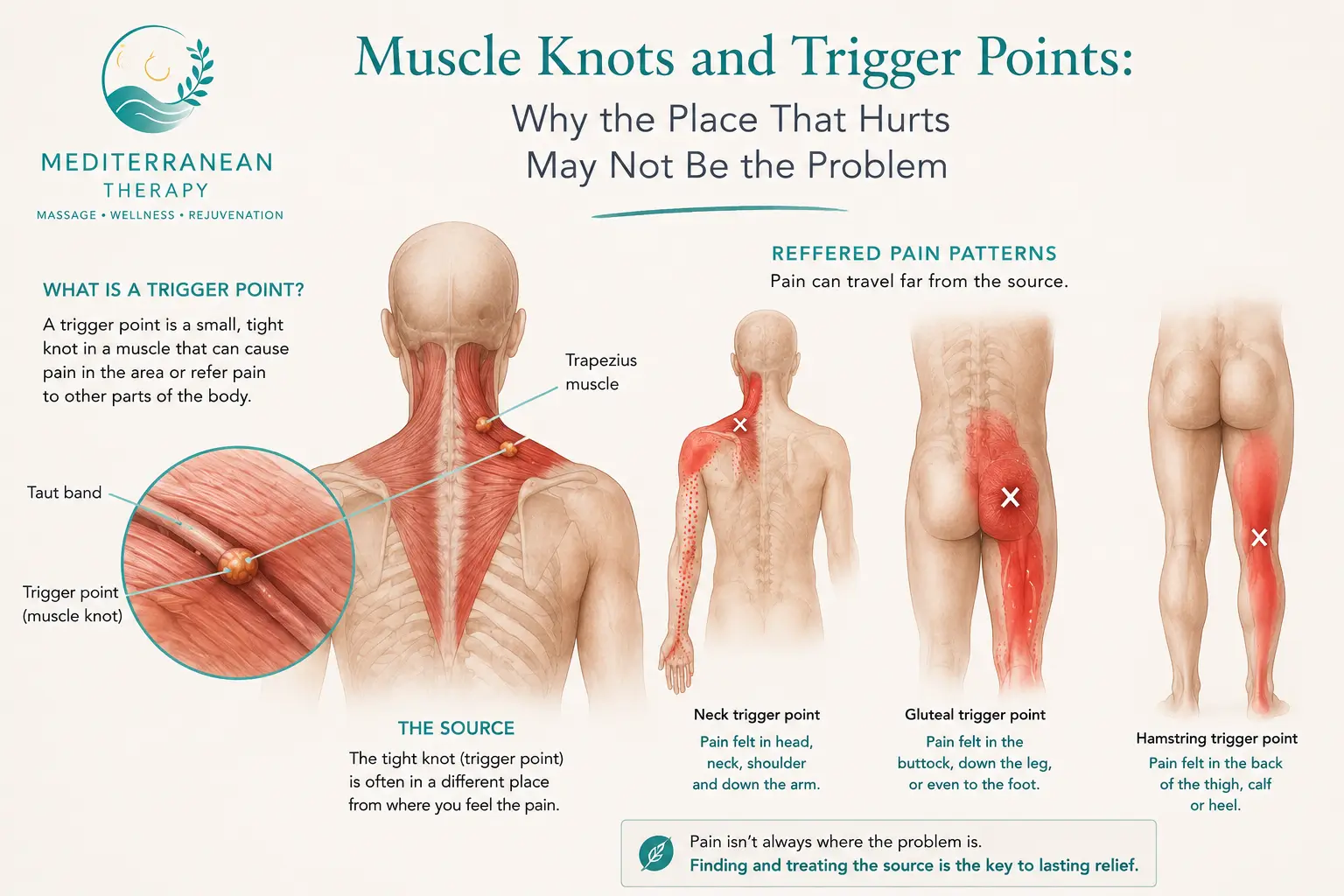
A myofascial trigger point is generally described as a sensitive spot within a taut area of skeletal muscle.

When pressure is applied, it may produce:

•  local tenderness
•  familiar muscular discomfort
•  pain somewhere nearby
•  or discomfort perceived in another area.

That last response is commonly referred to as referred pain.

For example, somebody may feel discomfort around the side of the head while a sensitive area of the neck is being palpated.

Or a point around the shoulder blade may reproduce sensations into the shoulder or arm.

However, the science of trigger points is more complicated than many social-media diagrams suggest.

There isn’t a tiny physical “knot” that a therapist simply crushes or removes.

Research into exactly what trigger points are, why they form and how reliably they can be identified is still developing.

So while the term is useful clinically and widely used within massage and musculoskeletal therapy, it is better to think of a trigger point as a sensitive area associated with muscular pain and altered sensitivity, rather than a literal knot tied inside the muscle.

What Is Referred Pain?

Referred pain means that discomfort is experienced somewhere other than or in addition to the area being stimulated or irritated.

This can seem strange.

Imagine your therapist works on a tender point near your shoulder blade and you suddenly say: “I can feel that in my neck.”

Nothing has physically travelled from one place to another.

Pain is an experience created by the nervous system, and the relationship between tissues, nerves, the spinal cord and the brain is complex.

Different pain mechanisms can produce symptoms away from the apparent source.

This is one reason that simply pointing to the place that hurts doesn’t always tell us the entire story.

Why the Painful Spot May Not Be the Only Area That Matters

Let’s take a common example.

Someone books a deep tissue massage in Bath because their right shoulder constantly feels tight.

They point to one exact location and say:

“Please work really deeply there. That’s where the problem is.”

It might indeed be an important area.

But there may be other relevant factors.

They might:

•  spend eight hours a day working on a laptop
•  frequently hold their phone between shoulder and ear
•  train their upper body several times per week
•  sleep predominantly on one side
•  have reduced movement through the neck or upper back
•  carry persistent muscular tension during periods of stress.

The tender point is therefore part of a much bigger picture.

Good massage therapy shouldn’t simply involve pressing harder and harder on one painful spot.

Why Do Muscle Knots Keep Coming Back?

This is one of the most common questions people ask. They have a massage. The tight area feels considerably better.

Then two weeks later: “The knot has come back.”

That doesn’t necessarily mean the massage failed.

Muscles respond to the demands placed upon them every day.

If the same loading pattern continues prolonged sitting, repetitive work, intense training, limited movement or stress-related muscle guarding it isn’t surprising if familiar areas become sensitive again.

The better question may therefore be: “What is repeatedly contributing to this area becoming uncomfortable?”

Sometimes massage is one useful part of that picture.

Movement, exercise, recovery, work setup and other lifestyle factors may also matter.

Are Trigger Points Caused by Bad Posture?

This needs a careful answer.

Posture is often blamed for practically every neck and shoulder problem.

You’ll frequently see claims such as:

“Poor posture causes knots.”

The human body is more adaptable than that.

There isn’t one perfect posture that everybody needs to maintain all day.

In reality, remaining in one position for a very long time may matter more than whether the posture looks technically perfect.

A beautifully positioned person who doesn’t move for four hours may still feel uncomfortable.

Someone sitting in a less-than-perfect position who changes posture frequently may feel perfectly fine.

For many desk workers, therefore, the practical message isn’t: “Sit perfectly straight all day.”

It’s: Move regularly.

Stress and Muscle Tension

Muscle tension isn’t only about physical activity.

Stress can change the way we hold our bodies.

Think about what happens during a difficult day.

Your shoulders may lift slightly.

Your jaw may tighten.

Your breathing may become shallower.

You may remain rigid in front of the computer without noticing.

Hours later, your neck and shoulders feel exhausted.

This is one reason massage can feel valuable even when somebody hasn’t sustained a specific injury.

The issue isn’t necessarily damaged tissue.

Sometimes the body has simply spent too much time in a heightened state of muscular tension.

Common Areas Where People Notice Muscle Knots

Neck and shoulders

Probably the area clients mention most frequently.

Long periods of screen use, repetitive arm activity, stress and everyday loading can all contribute to a feeling of neck and shoulder tightness.

Some sensitive muscular areas may also be associated with headaches or discomfort around the head.

Between the shoulder blades

People often describe a stubborn spot that they desperately want someone to “dig into”.

This area can certainly feel extremely satisfying to massage.

However, repeatedly attacking one point isn’t necessarily the most useful approach.

The neck, shoulders, upper back and movement of the shoulder blades may all be worth considering.

Lower back

The lower back contains multiple layers of muscles that work continuously during standing, bending and movement.

Tender or tight areas are common, particularly after unfamiliar activity.

Persistent or radiating lower-back pain, however, deserves appropriate assessment rather than automatically being labelled a muscle knot.

Glutes and hips

The gluteal muscles and deeper hip muscles can develop sensitive areas, particularly in people who run, train, sit for long periods or perform repetitive activity.

This connects closely with another topic we recently explored: piriformis-related pain and sciatica-like symptoms.

Not every painful glute is simply a trigger point — and pain travelling down the leg should not automatically be blamed on a tight muscle.

Trigger Points vs Sciatica or Nerve Pain

This distinction is particularly important.

Muscular pain may feel:

•  achy
•  tender
•  tight
•  sore
•  restricted

Nerve-related symptoms may be described as:

•  burning
•  electrical
•  shooting
•  tingling
•  numb
•  travelling

There can be overlap, so symptoms alone cannot provide a diagnosis.

If discomfort travels significantly down an arm or leg, particularly if you experience numbness or weakness, don’t assume somebody simply needs to “release the knot”.

Those symptoms may warrant assessment by a GP, physiotherapist or another appropriate healthcare professional.

Can Massage Help Muscle Knots and Trigger Points?

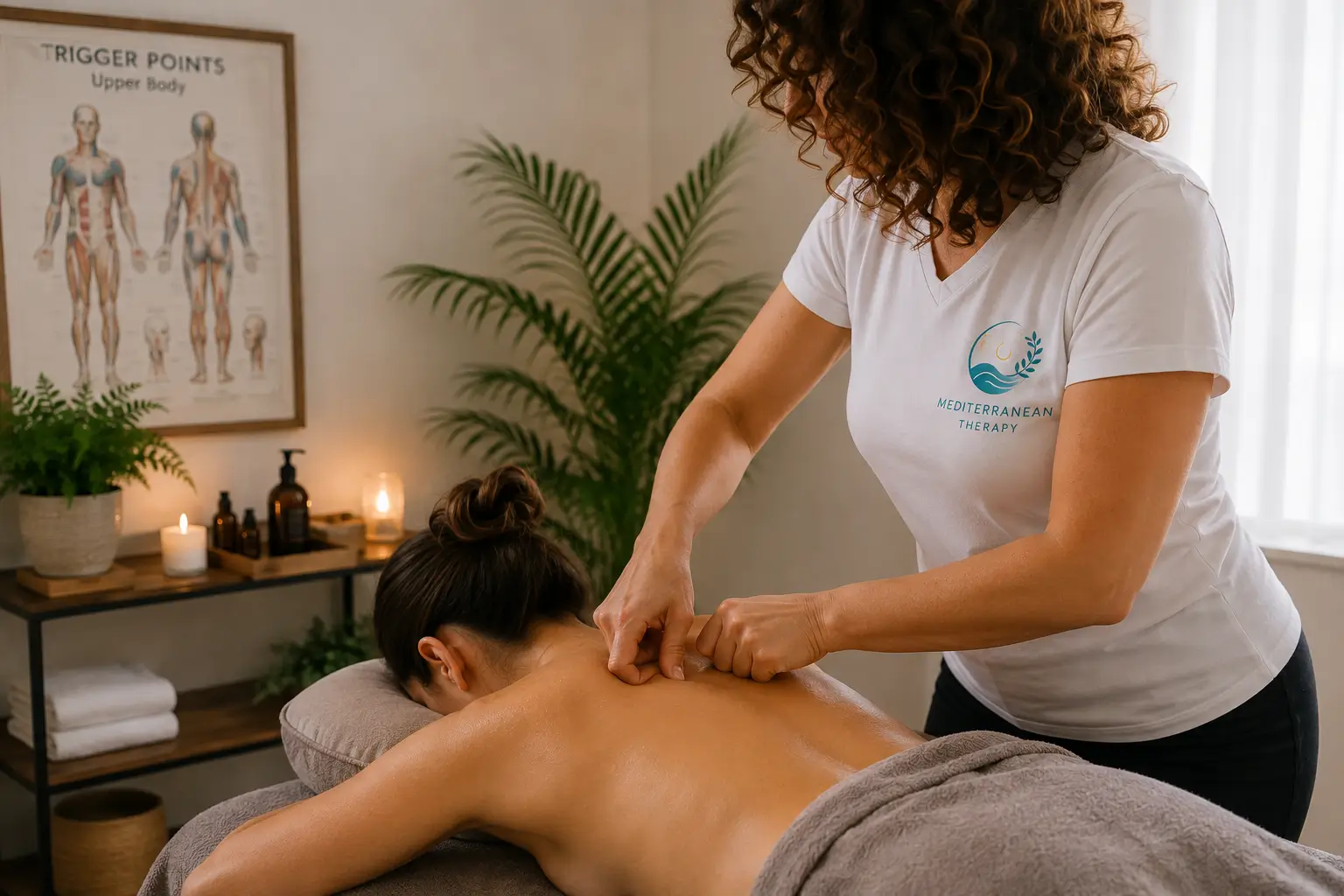
Massage may help reduce muscular tension, soreness and sensitivity for some people.

Different approaches can be used depending on the person and the area involved.

These might include:

•  slower focused massage
•  sustained pressure
•  compression
•  soft tissue techniques
•  movement
•  stretching techniques
•  trigger point techniques
•  broader work around associated muscles

The treatment shouldn’t simply become a contest to see how much pressure the client can tolerate.

Sometimes a very sensitive area responds better to slower, more measured work.

Does Trigger Point Massage Need to Hurt?

No.

There is a persistent myth around massage:

“If it doesn’t hurt, it isn’t working.”

That’s not a good principle.

Focused work can certainly feel intense.

A client might describe the sensation as:

“good pain”

or

“that’s exactly the spot.”

But sharp, burning, electrical or unbearable pain isn’t something a therapist should simply push through.

Pressure should always be adapted.

Good communication between therapist and client matters more than achieving maximum intensity.

Deep Tissue Massage and Muscle Knots

People searching for a deep tissue massage in Bath often have a very specific expectation:

They want somebody to “really get into the knots”.

Deep tissue massage can certainly involve focused work on areas of muscular tension.

But deep tissue doesn’t simply mean hard massage.

A skilled treatment can use slower techniques and targeted pressure to work with deeper muscular layers while constantly responding to how the tissue and client react.

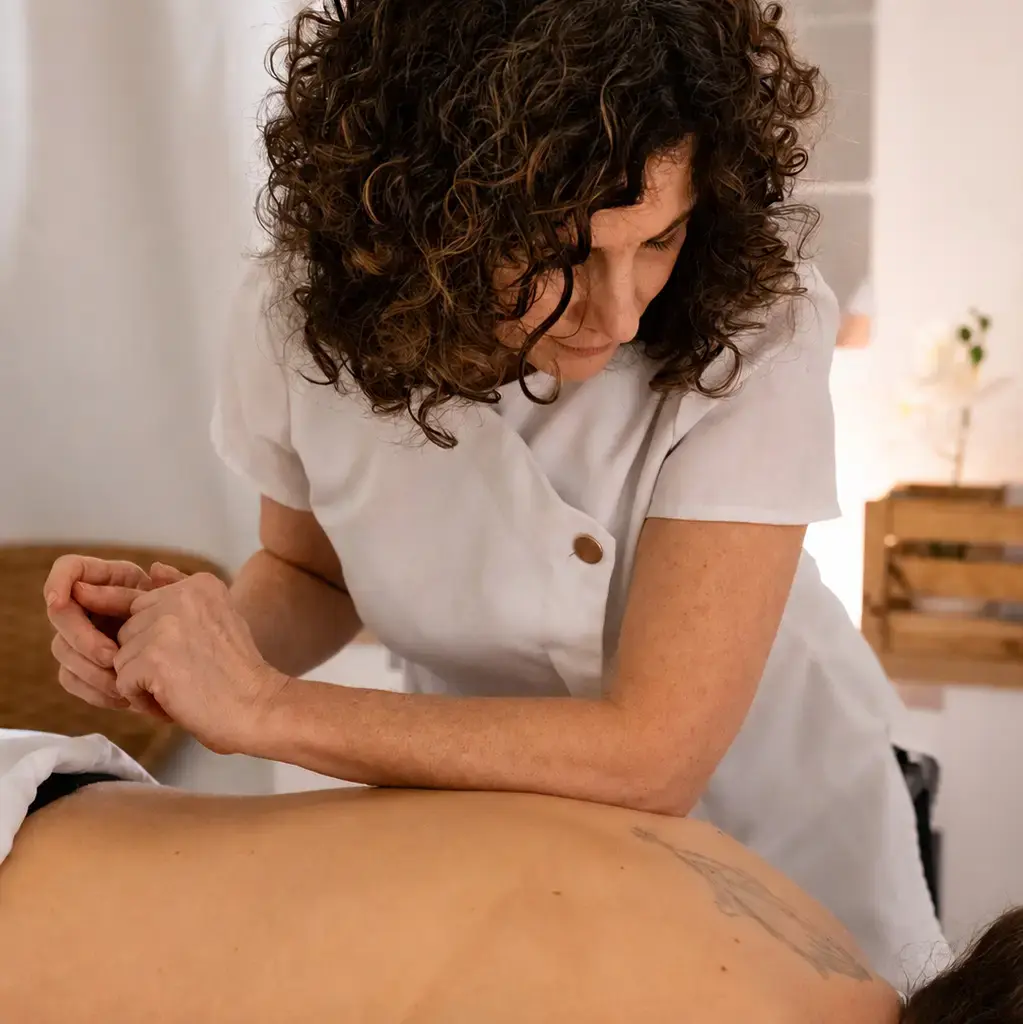
Sometimes forearms or elbows may be appropriate.

Sometimes fingertips or broad pressure work better.

Sometimes the surrounding muscles need more attention than the point the client initially identified.

The technique should serve the body not the other way around.

What About Sports Massage?

Another common misconception is that sports massage is only for athletes.

It isn’t.

The principles associated with sports and soft-tissue massage can be relevant to anyone experiencing muscular tightness from repetitive activity.

Your “sport” might be:

•  running
•  weight training
•  cycling
•  gardening
•  carrying children
•  working physically
•  or sitting at a computer all week.

Sports massage tends to be more targeted than a general relaxation treatment and may incorporate techniques aimed at particular muscles or movement-related areas.

Trigger point work can form part of that treatment when appropriate.

Frequently Asked Questions

“Muscle knot” is an informal term rather than a precise anatomical diagnosis. People usually use it to describe a tender or tight area of muscle. Such sensitive areas are real, although exactly what produces the sensation can vary.

The terms are often used interchangeably, although “trigger point” has a more specific meaning within myofascial pain terminology.

Sensitive muscular areas described as trigger points can be associated with pain perceived beyond the point being pressed. This is commonly described as referred pain.

Massage may reduce tenderness and muscular tension, but it is misleading to think of a knot as a physical object that can simply be broken up or removed.

Deep tissue massage can be useful for focused muscular tension, but the right amount of pressure varies between individuals. More pressure isn’t automatically more effective.

It may feel tender or intense, but treatment should remain tolerable. Sharp, burning or electrical pain is not something to simply push through.

Sports massage can incorporate focused soft tissue and trigger point techniques and may be useful for muscular tension related to training or everyday repetitive activity.

No. People with physically demanding jobs, desk-related muscle tension or general muscular tightness may also benefit from a targeted approach.

There may be ongoing factors such as repeated loading, work habits, exercise, stress or limited movement variety. Massage may provide relief, but sometimes it is useful to look at the wider pattern.

Symptoms involving significant numbness, weakness, persistent radiating pain, trauma or unexplained worsening discomfort should be appropriately assessed rather than automatically assumed to be a trigger point.

If you’re experiencing muscular tightness around your lower back, hips or glutes and are looking for a deep tissue massage or therapeutic massage in Bath, treatment can be adapted to your individual needs rather than following a standard routine.

Mediterranean Therapy offers personalised massage treatments in central Bath, including Deep Tissue Massage, therapeutic massage and Manual Lymphatic Drainage, with each treatment selected according to the client’s goals and suitability.

If you’re unsure which massage to book, simply get in touch and explain what you’re experiencing before your appointment.

Visit Me for Your Massage in Bath

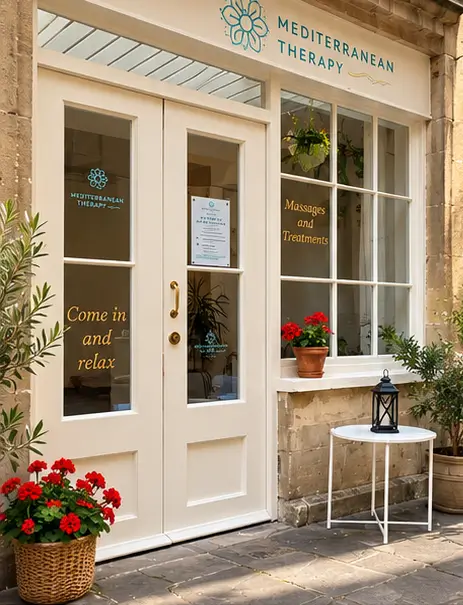
Enjoy your treatment at Mediterranean Therapy, located inside The Soul Spa a serene, centrally located wellness space in the heart of Bath:

📍 2 Hetling Court, Bath. Tel: 07378275075
👉 Click and get directions

Relax with a massage. Your expert massage therapist in Bath is ready to help you restore balance and calm, the best experience massage in Bath.

Teresa - Your Spa Therapist

Teresa - Your Spa Therapist

Massage therapist, facials and skincare with 5 star hotel experiences, an expert in a wide range of treatments.

Mediterranean Therapy
2 Hetling Court Bath - Tel: 07378275075

Leave Your Comment

Your email address will not be published. Required fields are marked *

Massage Therapist Posts

Massage & Rejuvenation Services

  • Back, Neck & Shoulder
    Back, Neck & Shoulder

    30 mins – Click to Book!

    £ 35
  • Couple Massage
    Couple Massage

    1 hour – Click to Book!

    £ 140
  • Deep Tissue Massage
    Deep Tissue Massage

    1 hour – Click to Book!

    £ 70
  • Lymphatic Drainage Massage
    Lymphatic Drainage Massage

    1 hour – Click to Book!

    £ 70
  • Hot Stone Massage
    Hot Stone Massage

    1 hour – Click to Book!

    £ 70
  • Pregnancy Massage
    Pregnancy Massage

    1 hour – Click to Book!

    £ 70

Follow me on Social Media

Shopping Basket